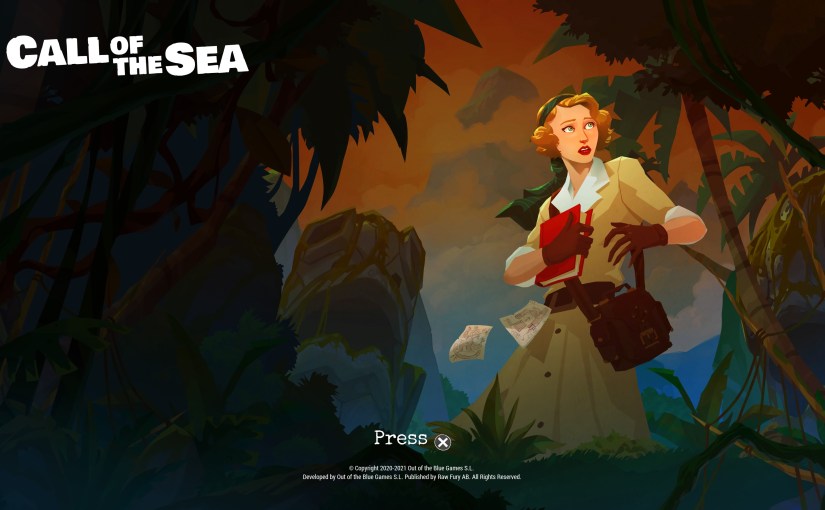
Typically, when I walk away from a game (having completed it, or not) it’s easy for me to explain what I liked about it, and why. It’s even easier to articulate when I didn’t click with something, and what didn’t work for me. Which is to say, it’s a pretty simple call, to decide if I liked something or not. Obviously, right? Well, Call of the Sea (2020) is stuck in my craw, so to speak, because I genuinely can’t decide if I enjoyed it or not. I mean, I did enjoy it, because I looked forward to playing it, and I thought the puzzles were great. But do I think it was good? I’m not sure, which is why I’m here, rambling about it. When it comes to gameplay and storytelling, what tips the scales to make a game “good” or “bad”? Are they both equally important, or is one more weighty than the other? (Here there be full spoilers, I don’t recommend reading if you wanted to play the game yourself).

Story
Call of the Sea follows its protagonist, Norah, who receives a summons from an unknown sender that promises answers about her lost husband and his failed expedition to a mysterious island. Of course, she sets out for the island (because of course she does) looking for her missing husband, which is where the adventure really begins. Harry Everhart (I’m not convinced his government name isn’t Old Pal, since that’s what he and Norah both call each other) was on the island with the intent of finding a cure for Norah’s unnamed illness when things went awry. As Norah, you’ll investigate the remnants of the expedition, and slowly unravel what happened as you solve puzzles to progress further into the island. Touted as an “otherworldly tale of mystery, adventure, and self-discovery,” I was excited to see where this Lovecraftian-lite story took me. I did, however, find this tale sorely lacking.
The narrative starts strong, by introducing the player to Norah and her situation, and giving her a clear trail of breadcrumbs to follow, as she quickly finds evidence of her husband’s expedition. I was particularly intrigued by the cosmic elements the game starts teasing early on; an ancient civilization worshipping an unknown, inhuman god and conducting rituals with black ichor of suspicious origin is always a good time. I enjoyed slowly unraveling the fate of the expedition and all of its members through the various notes, letters, and photos they left behind. Fortunately, I suppose, the narrative didn’t completely lose me until the very end, when the truth behind Norah’s journey is revealed, and the player gets to choose between two different endings.
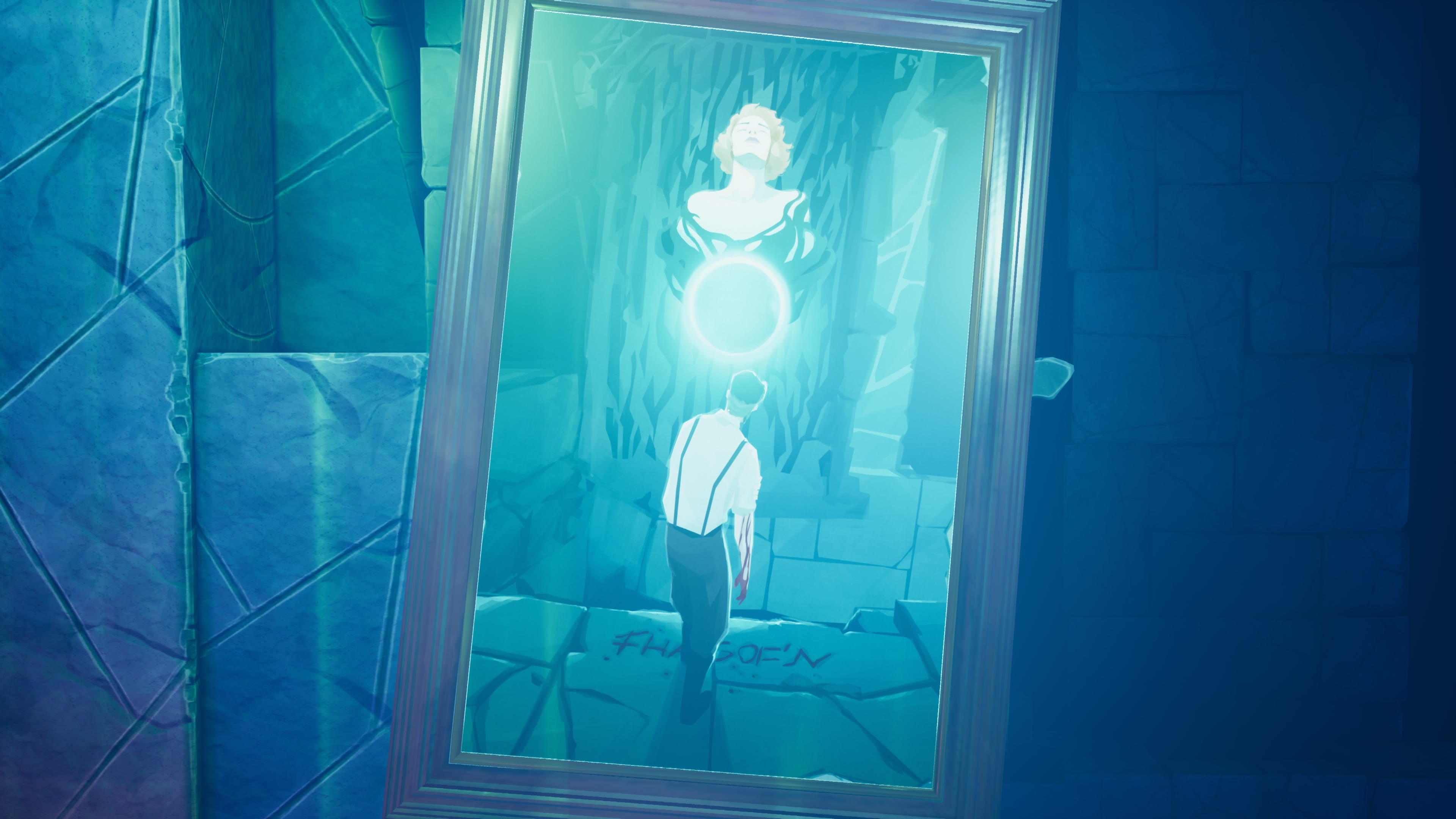
Norah discovers that she was lured to the island by none other than Old Pal himself – he orchestrated her trip to the island in the hopes that Norah would choose to perform the ancient transformation ritual, and remain on the island as an immortal fish person, thus “curing” her disease (the nature of which is still unclear, but being away from the island makes it worse, and it will eventually kill her). The player can choose to do this, accept the transformation, and have Norah abandon her previous life. Or, you can choose to reject the ritual, ignore what you’ve learned, and return home to Harry to live out the remainder of your life. Both of these options are terrible. A two-pack of ass, if you will.
While I admit nothing about the game promised a feminist narrative, I was hopeful that Norah’s journey of self-discovery wouldn’t end in her being robbed of all agency; her sense of self ends up being completely irrelevant in either of the conclusions. I originally chose the “Norah becomes her best creature-from-the-black-lagoon self” ending, because her commentary throughout the game (that she truly felt like she was home on the island, and she physically felt better than she ever had) seemed to be an indication that she’d be better off there. Unfortunately, I must have missed the memo that becoming an immortal fish person came with the caveat that you essentially become part of a hivemind structure. Norah states that “nothing matters anymore” as she completes her transformation and connects to the elder god. Old Pal Everhart narrates the end of the game, where he questions whether he made the correct choice, having lied to Norah, and we fade to black. Which was not quite as positive a finale as I was imagining.
In the other ending, Norah leaves the island and returns home to Harry. As they sing together during the credits, Norah succumbs to a coughing fit, and is forced back to bed. Harry also narrates the close of this ending, where he laments having to live out the remainder of his life without Norah, who has passed away. So, in case it wasn’t clear, one of my biggest issues with both endings is the transition in “narrators” – we move from Norah’s perspective, to Harry’s. It’s certainly a choice to have Harry be in control of the story, especially after the reveal that he was the driving force behind Norah setting off on her path to the island. It gives the impression that Norah’s story, well, wasn’t really her story at all. Not only did he manipulate her, instead of telling her the truth (for whatever reason) he also gets to have the final word. From a writing perspective, I felt this was a huge misstep, and left me feeling a tad bitter. Why didn’t we just play as Harry, then?
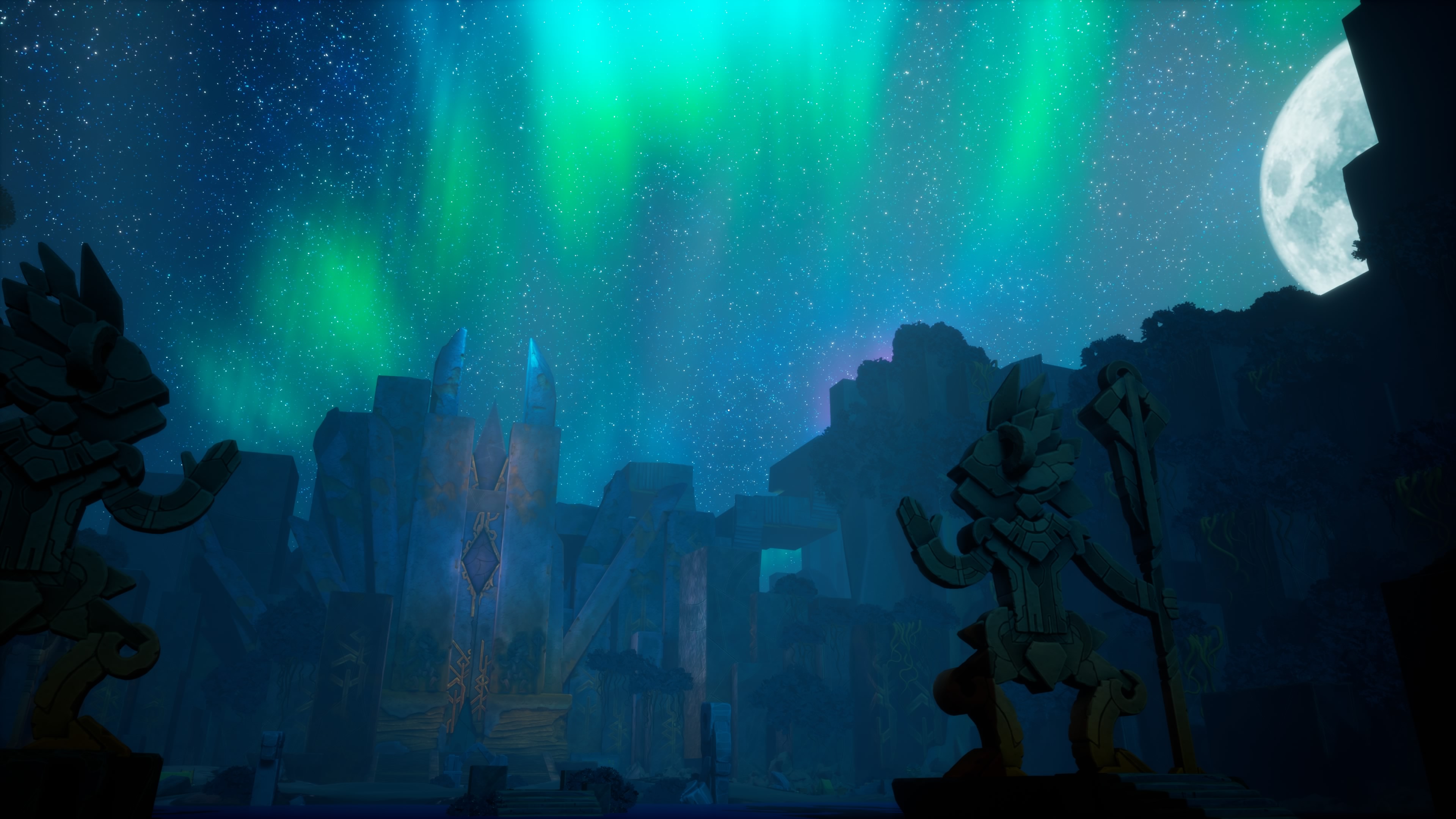
My second, more minor complaint about the “twist” ending is what we discover about the fate of Harry’s expedition members – well, one member in particular. When we learn about Old Pal’s adventure through all of the documents his team members left behind, we get a pretty interesting secondhand account of the various tragedies that befell them – Frank is stabbed by DeWitt (driven to madness by the black ooze), and Roy blew himself up in an unfortunate dynamite related incident, god rest him. But the only other named female character in the game, Cassandra Ward, a reporter/journalist, ends up being the villain, because of course she does. I guess she’s pretty desperate for those pictures of Spider-Man (or maybe she really wanted to be an immortal mermaid, I’m honestly not sure) because she turns on Harry in the end. In her quest to perform the ritual, she shoots Harry, and moves forward alone – she dies in the process of course, and hers is the body you find in the “throne room.” So, while Call of the Sea is villainizing the only other female character in the story, Norah is losing her sense of self and giving the final word to her lying husband. Once all semblance of Norah’s agency is gone, her journey ends up feeling… kind of pointless. Does Norah’s discovery of her true nature even matter when there’s no “Norah” left? The overall story left me feeling majorly unsatisfied.
Puzzles
Despite the narrative letdown, Call of the Sea has the exact kind of puzzles that I love – everything was very intuitive, and there were only a few instances where I felt like I wasn’t clear on what the game wanted from me. But usually after some more thinking, or a bit of exploration (featuring trial and error) I was able to put things together. My favourite puzzle, and the one I was stumped on the longest, is at the end of Chapter 4 – solving it will open a door that leads into a temple of sorts, and the beginning of Chapter 5.
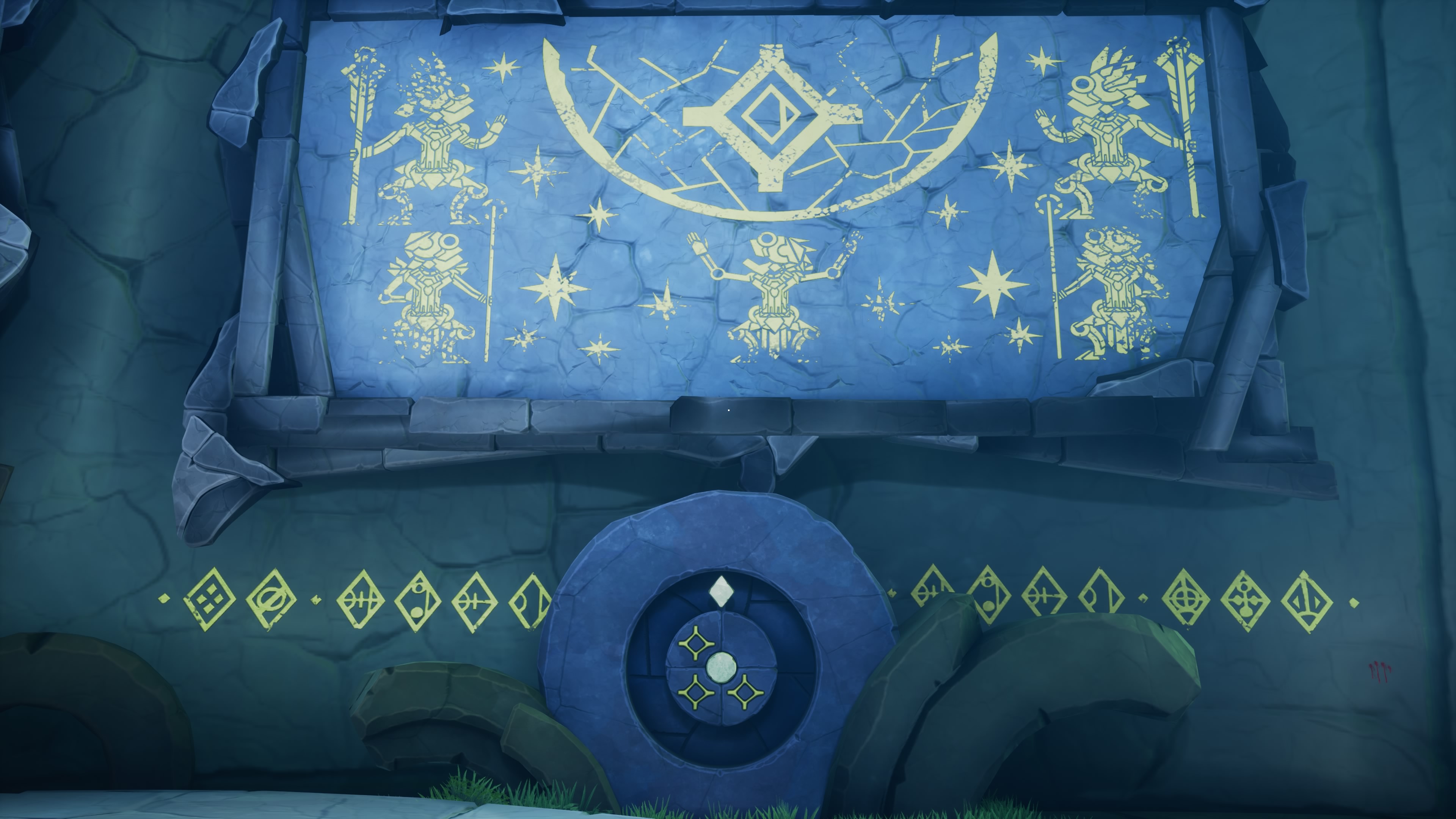
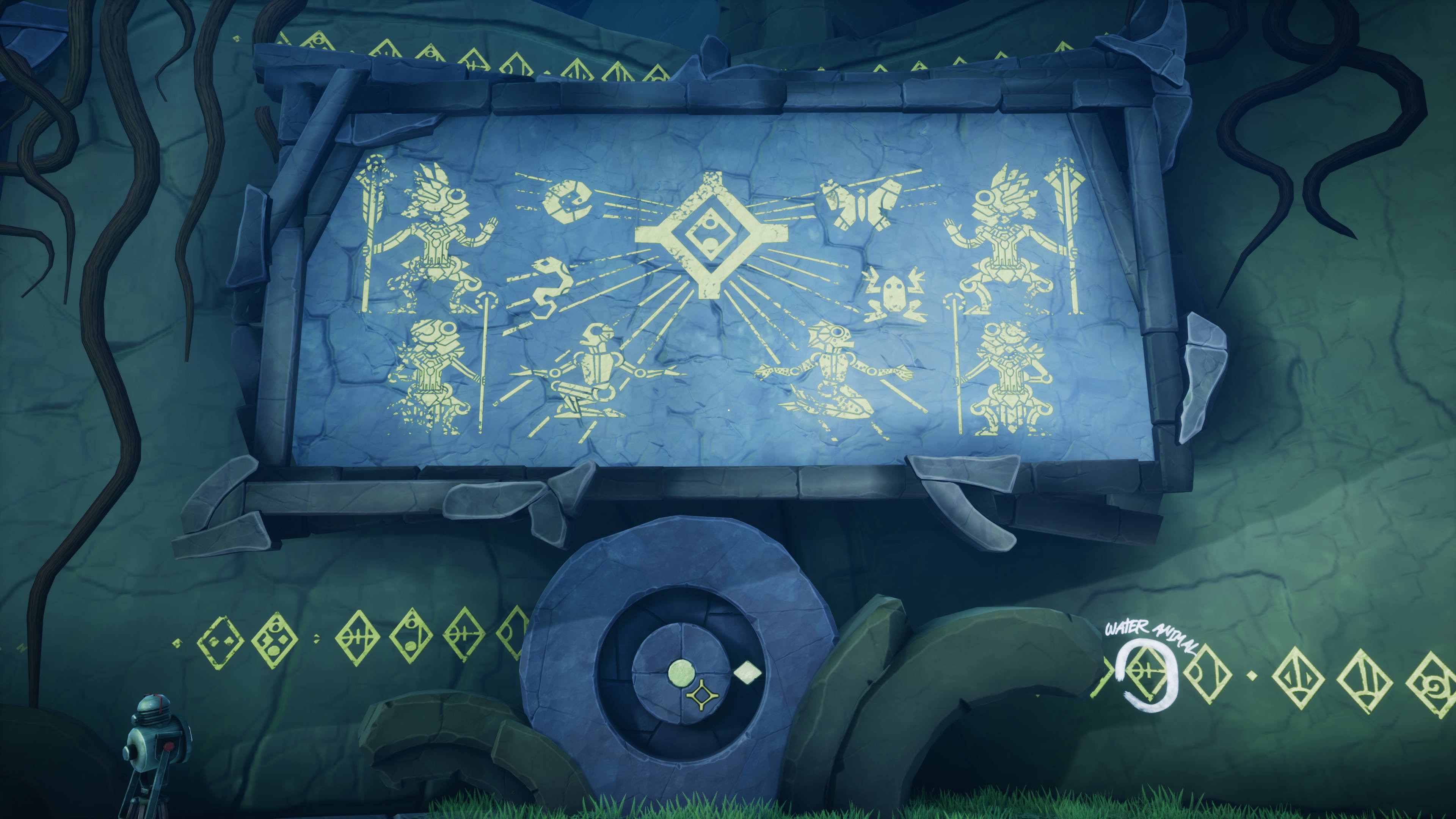
To break down the elements of said puzzle: there are four murals on the wall in this room, each depicting an element of the transformation ritual that grants eternal life (all hail Cthulhu). Each of the murals also has a descriptor word (they look like diamond hieroglyphs) that identifies each one. We’ve got Transformation, Liquid, Life, and Eternal. Each mural has its own corresponding “ring” underneath – it looks like a dartboard, but with four quadrants. And each of these mural rings has a certain number of diamonds (up to one in each quadrant) within the ring: either one, two, or three. And finally, there is a separate diamond on the outside of the ring, which you can rotate around to align with the lines between each of the quadrants. The notes that Norah makes in her journal are quite helpful to keep track of everything here.
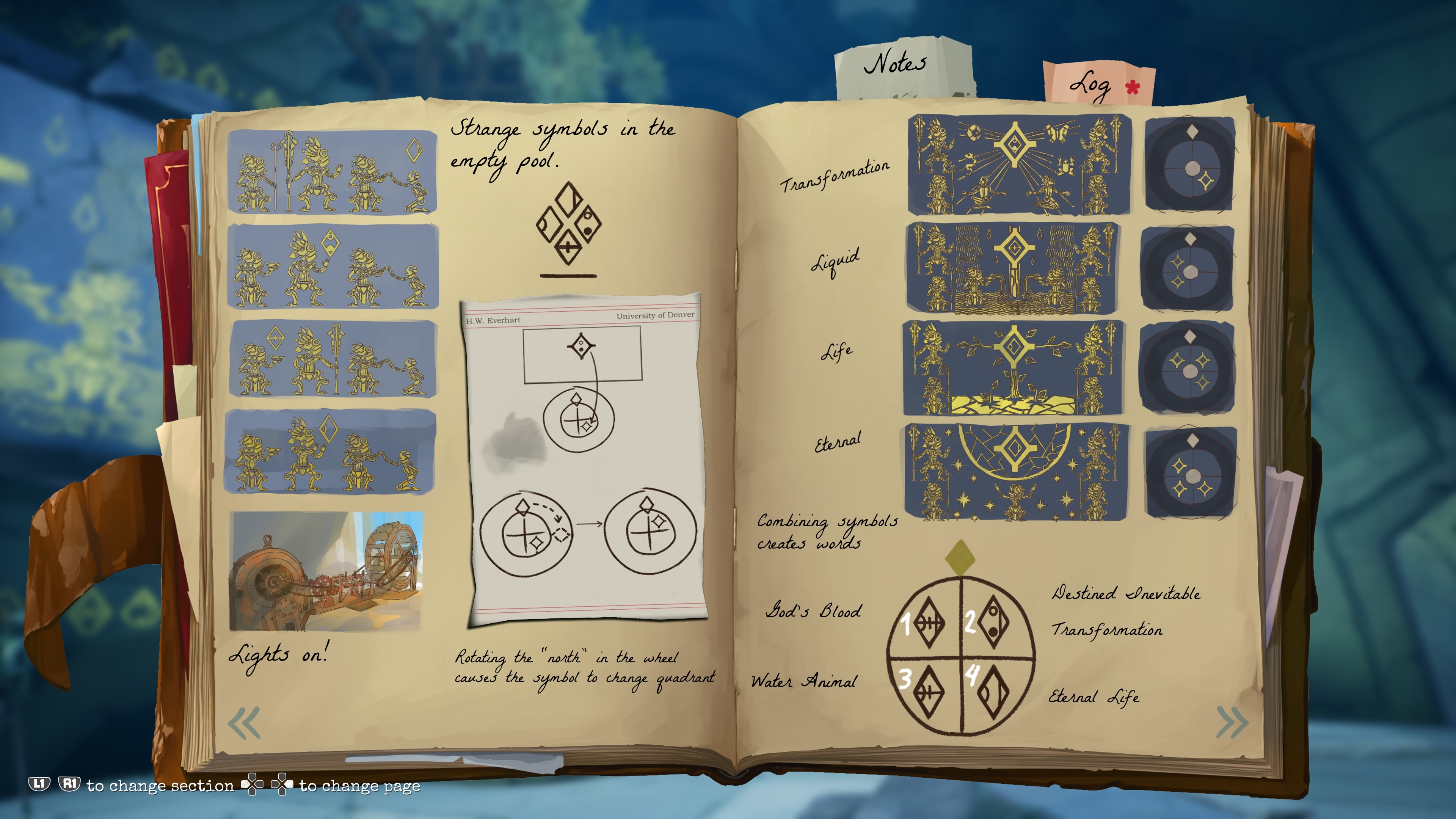
As you explore this room, and find Harry’s notes, you’ll see that he mapped out the building blocks of the hieroglyphic language used by this civilization – each individual hieroglyph correlates to a word (like the four words I mentioned above), and when these hieroglyphic symbols are combined, they can form more complex words or concepts. Harry had identified four “phrases” and mapped them onto the four quadrants of the rings. They are: 1. God’s Blood, 2. Destined/Inevitable 3. Water Animal, and 4. Eternal Life. Does your brain feel like oatmeal yet? Mine did. It took me entirely too long to figure out what the diamonds in the quadrants were meant to represent, and how they related to the four concepts that Harry identified. Eventually, my pea brain finally recognized that this was a language puzzle.
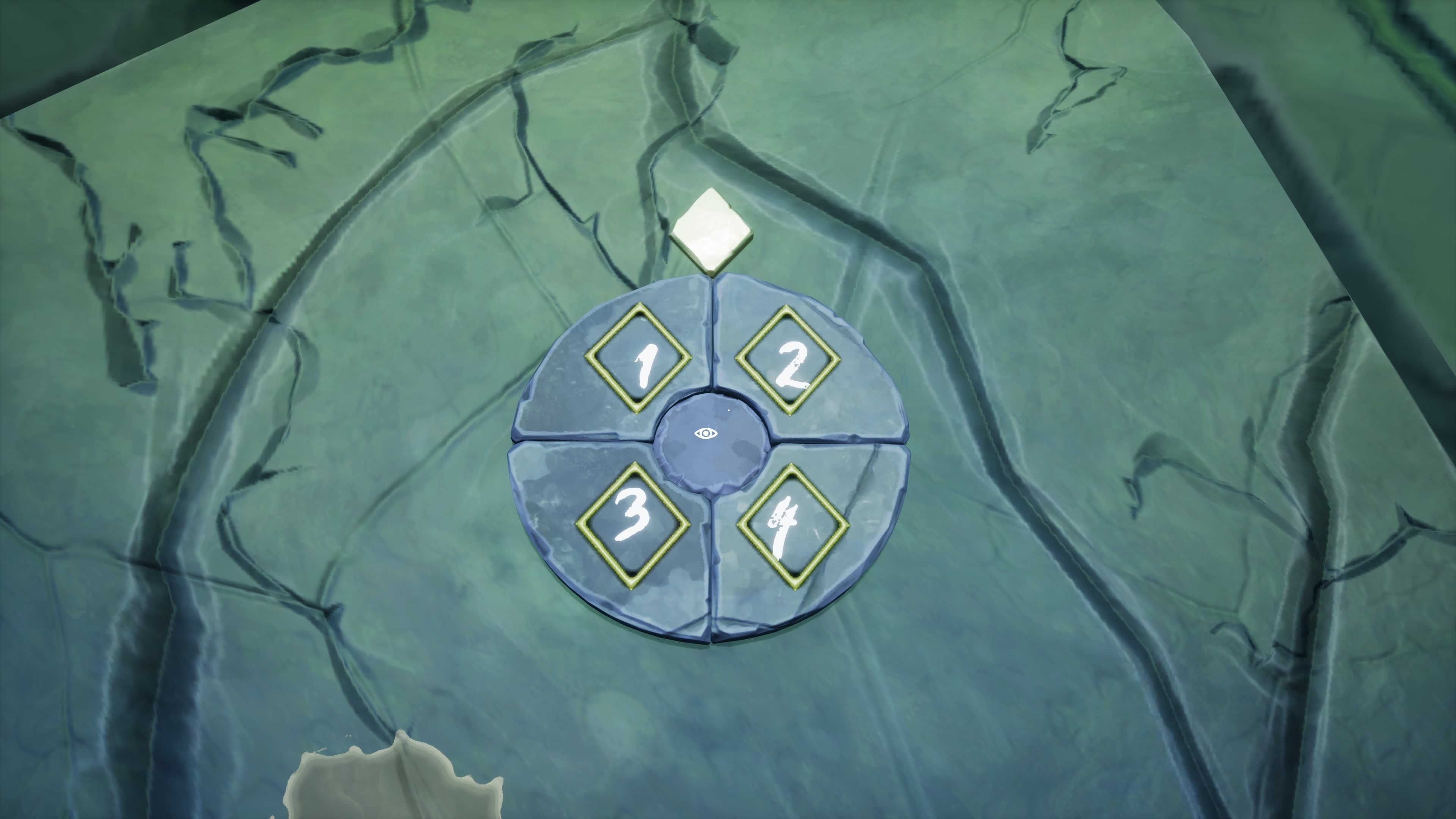
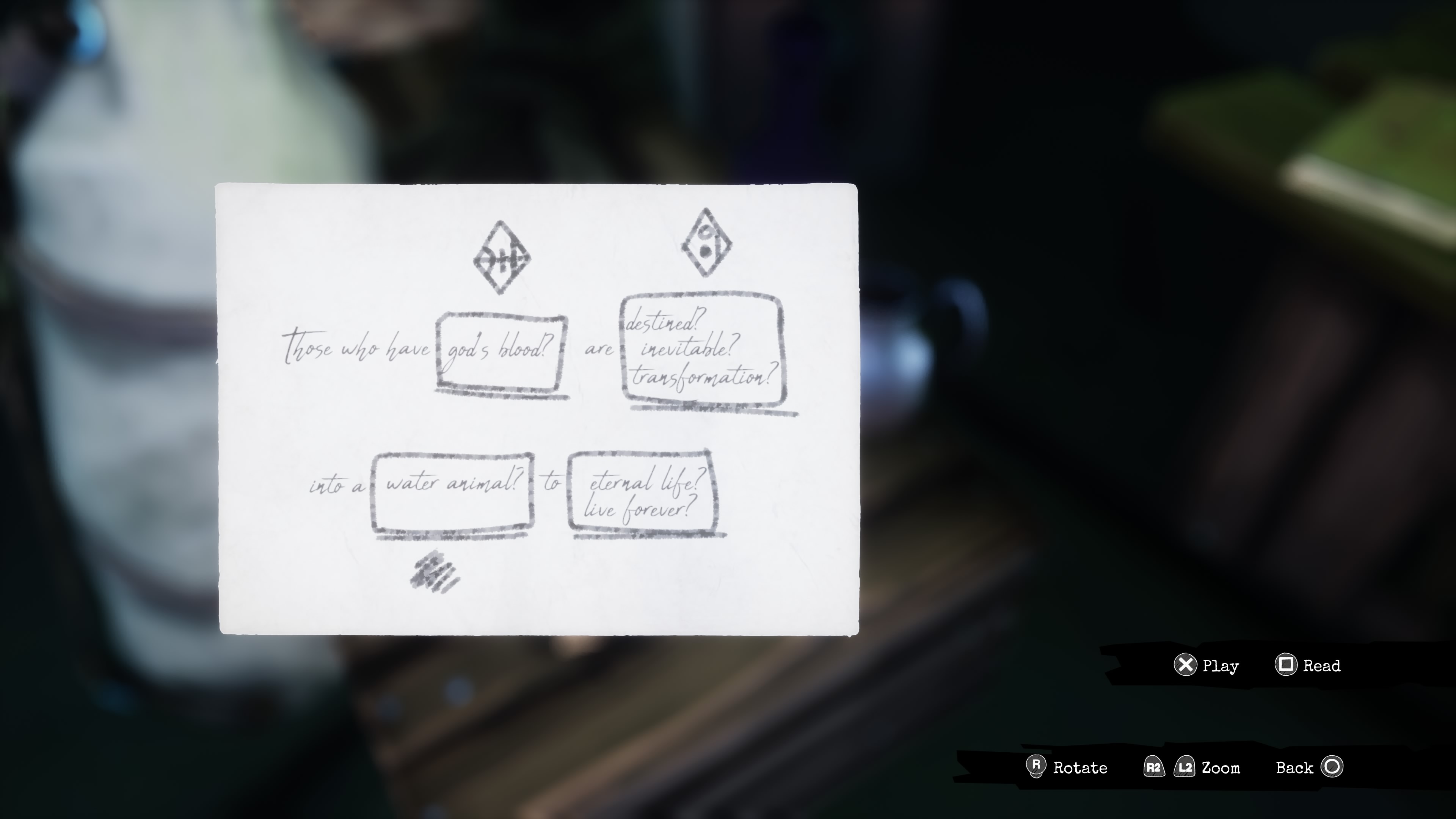
Each of the greater phrases are comprised of a combination of the hieroglyphic symbols that represent individual words – for example, the “Water Animal” is a combination of, you guessed it, the symbol for “liquid” and the symbol for “life.” Once you see how many times these individual ‘words’ appear in the more complex phrases, it’s a lot more obvious what the quadrant diamonds in each of the mural rings represent. There are repeating individual symbols (or words) inside the four phrases. The actual physical part of the puzzle is simply aligning the outer diamond to be the “top” of the quadrants, so they are correctly labeled; you’ll want the diamonds inside the ring to be in the proper position, as they appear in the phrases. So, for instance, to solve the “Transformation” mural ring, you’ll need to move the diamond into an Eastern position. The symbol for “transformation” only appears in one of the four combination hieroglyphs (phrases), which means it must be the ring with the single diamond inside, representing that one word. Moving the diamond simply aligns it with the correct quadrant – the top right quadrant, for 2. Destined, Inevitable. The “Life” mural will need to have the outer diamond in a Southern position, as the symbol for “life” appears in 3 of the phrases (1, 3, and 4). “Eternal” also appears in three of the phrases, and “Liquid” appears in two. I’ve probably explained this terribly, but hopefully you get the gist. I thought it was a brilliant puzzle, and it had me wracking my brain for longer than I am publicly willing to admit.
Conclusion
This section was easily the highlight of the game for me (followed closely by the “organ” puzzle in Chapter 3) and unfortunately, it’s followed by a series of rather weak puzzles in Chapter 5. I wish Call of the Sea had utilized these language puzzles more in the subsequent chapters, because it was such a unique and interesting element of the story. I’m not sure it would have saved the massively disappointing ending, but it might have left me with a more favourable view of the game. And all of this was just to say: I did enjoy the game, obviously, and I would recommend it to fans of puzzling or point-and-click type adventures. I have, somewhat begrudgingly, come to the conclusion that overall, it was a good game. And though it is a “good” game, the aspects I thought were lacking left a bad taste in my mouth, and in my mind, held it back from being great.
Ironically, as of playing the game and posting this, a sequel to this 2020 game was announced just a few weeks ago (you can check out the trailer if you’re interested), titled Call of the Elder Gods. The game looks to star Old Pal – erm, Harry Everhart, along with a new female character named Evangeline. Which loops me back to my original point about Call of the Sea‘s story – I don’t understand why Harry wasn’t the main character, with us following along and seeing the collapse of his original expedition. Oh well. I’m really looking forward to this sequel, if only for a repeat of the fantastic puzzle design of its predecessor. I’ll be patiently awaiting the next chapter in this eldritch adventure.

 Meghan Plays Games
I started this game via Game Pass a few years ago and was enjoying it, but got distracted by something else and just never came back. Reading about the endings now, I feel like I didn’t miss much.
LikeLiked by 1 person
I would honestly agree with you, LOL. I loved the puzzles, but the story was just so disappointing, it’s hard to recommend with enthusiasm?
LikeLiked by 1 person
I am immediately reminded of my own impressions of the story when I played. I also disliked the ending choices, for reasons that are different but also similar.
To adapt my complaints to your own criticisms, the ending choice makes Norah not feel like an actual character. If she can make both choices, she doesn’t really make either of them. All of the build up of her learning about herself and her initial purpose of finding Harry kind of goes out the window so that you can pick for her. Which I feel goes along with the sense that Harry is trying to make her decision for her – both rob her of agency at the end of the day.
My own take is that it would be better for her to make a choice. Even if it’s a choice I would personally disagree with, it at least wouldn’t feel…non-commital. Maybe that wouldn’t be enough, though. It’s hard to say for sure since that isn’t what we got.
LikeLiked by 1 person
I’m glad we’re on a similar page, because I wonder sometimes if I’m being too picky – so it’s nice to hear that others felt the same way? But I completely agree with you, and also agree that Norah making her own, set choice would have been preferable, as far as I see. It’s just strange to me that they had a whole, well-thought-out story in Harry’s expedition, then decided to approach it from a retroactive angle, while not fully committing to making it Norah’s Story. The end result is just a character and narrative that feels so flat?
LikeLiked by 1 person